








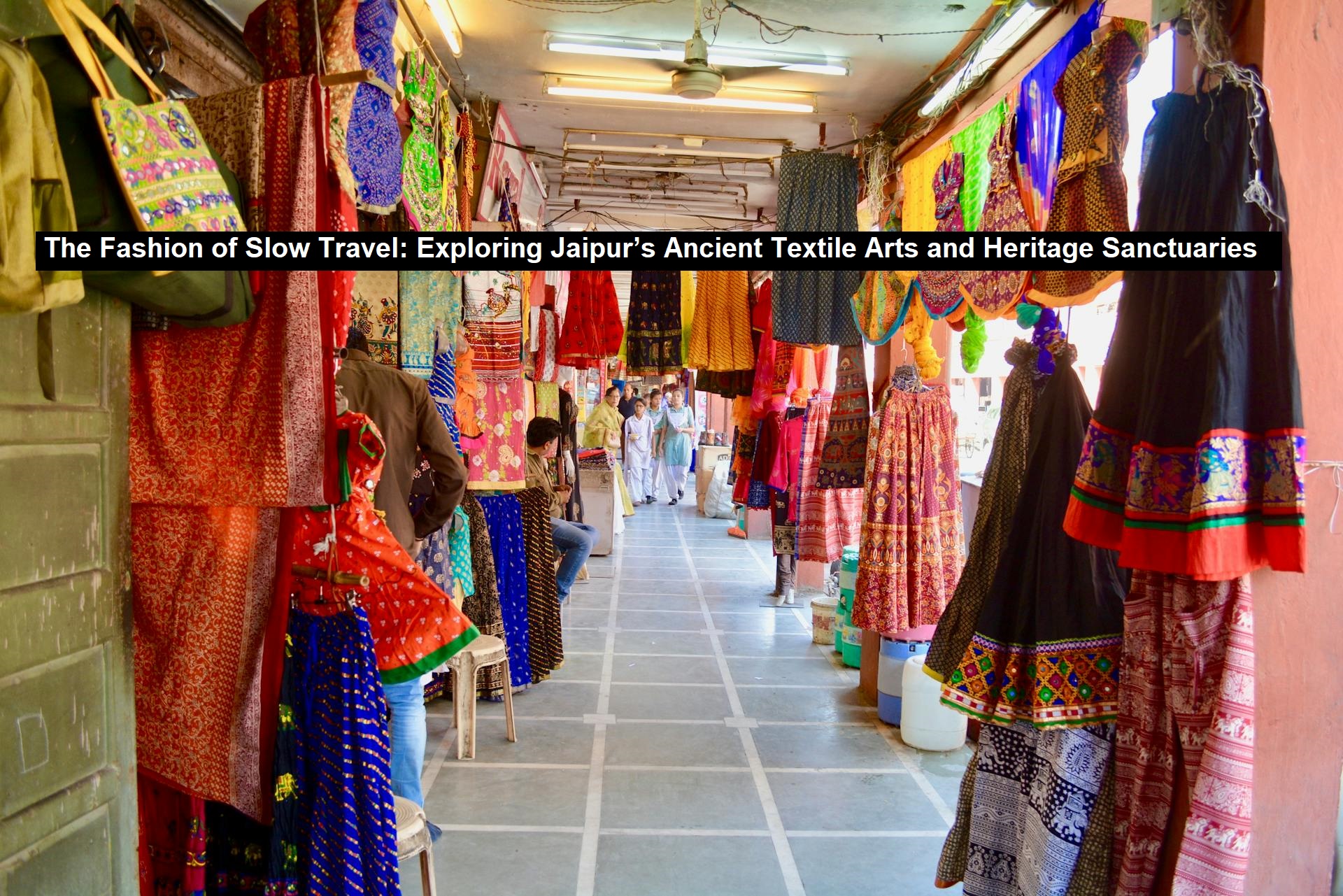
Fast fashion is mentally exhausting. We fly across entire oceans specifically to explore ancient, storied cultures, only to end up in packed, chaotic tourist markets haggling over mass-produced cotton shirts.
It happens every single day in the Pink City.
You push your way through the aggressive crowds of Bapu Bazaar. You buy a supposedly “handmade” stamped tunic, shove it deep into your suitcase, and likely never wear it back home. We routinely confuse mindless consumption with cultural appreciation. We miss the point entirely.
Slow Style: Textiles tied to the rhythms of the Earth
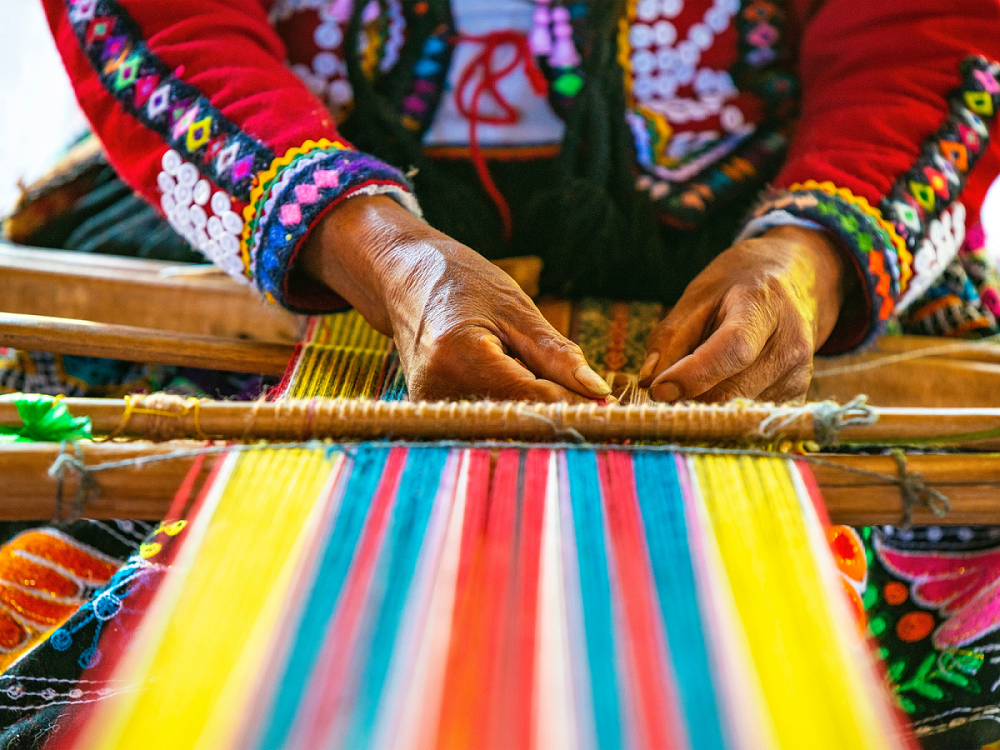
True style—especially in a culturally massive region like Rajasthan—is fiercely tied to the slow, deliberate rhythms of the earth. You cannot simply hand over a fistful of rupees, grab a bright shirt, and honestly expect to understand the soul of Indian textile arts. The history is way too dense for that. You have to actively trace the blue dye back to the indigo plant. You must sit quietly and watch a heavy wooden block violently strike raw fabric.
Right now, highly mindful travelers are abandoning those frantic city shopping sprees. They want experiential luxury instead.
Read: Air Travel With a Wheelchair: Tips for a Stress-Free Accessible Journey
Match your stay to the craft — why the setting matters
Finding a genuine, grounded sanctuary makes all the difference here. You definitely do not want to retreat to a generic, glass-paneled hotel room after spending your afternoon discussing centuries-old block printing techniques; it instantly shatters the historical illusion. The architecture surrounding you should flawlessly match the ethos of the garment you are studying.
This is precisely why savvy global travelers immediately book out historically preserved countryside hotels in jaipur.
A living haveli and the perfect slow-travel base
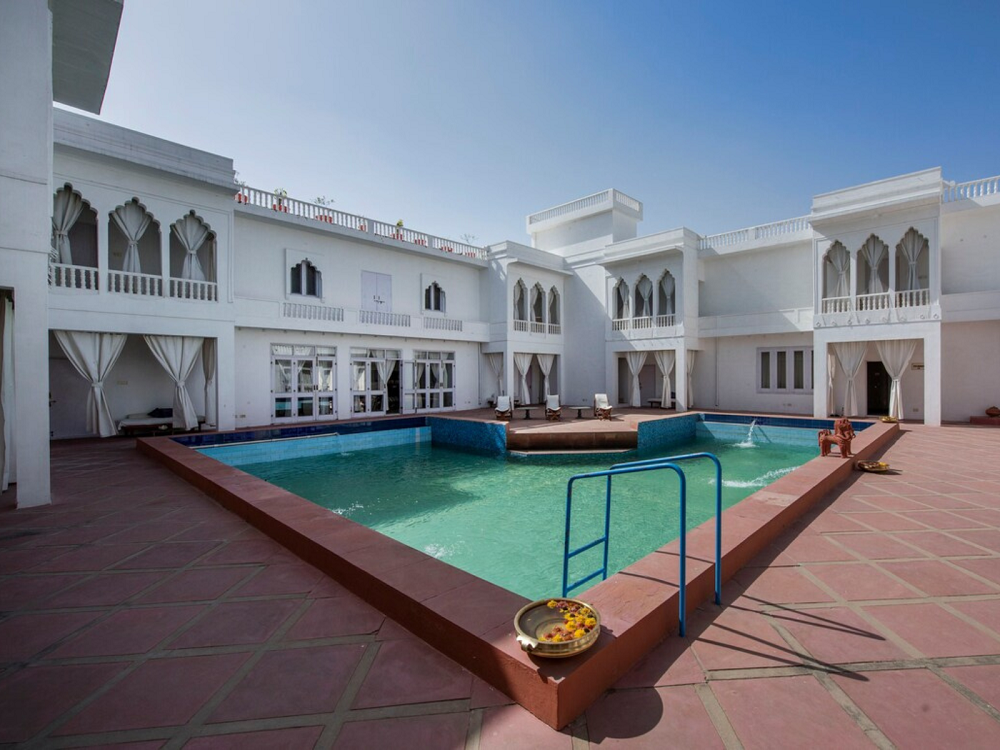
Look at an estate like the Savista Retreat. It operates completely off the grid of commercial tourism, resting on a sprawling 12-acre organic farm roughly forty minutes away from the relentless, maddening honking of central Jaipur. The property itself is an extensively restored ancestral Rajput haveli. They essentially saved a giant, livable artifact. The incredibly thick walls are traditionally lime-plastered. The interior courtyards are thrown completely open to the starry desert skies. It perfectly mirrors the slow, deeply intentional craftsmanship of the region’s famed fabrics. Staying somewhere this profoundly rooted physically grounds your entire itinerary.
Hands-on block printing at the Estate

Now, let’s talk about the clothes.
Instead of elbowing your way through aggressive retail showrooms, you just stay put. You let the absolute best artisans come directly to you.
At Savista, the connection to nearby craft hubs—like the legendary printing village of Bagru—runs incredibly deep. You don’t just sit on a chair politely watching someone else do the heavy lifting. You ruin your manicure. You roll up your sleeves and actively participate in a traditional hand block printing workshop in jaipur.
Hereditary masters—craftsmen whose specific families have literally passed down carved teak blocks for five or six generations—personally guide you. They teach you the remarkably strict geometry of the art form.
The sensory classroom — Indigo, dyes and the physicality of craft
The courtyard smells distinctly like damp earth and raw indigo.
You learn to meticulously mix natural, organic dyes extracted directly from turmeric, pomegranate rinds, and iron-rich mud. The sheer physical pressure required to stamp a perfectly repetitive, mathematically symmetrical pattern across three yards of raw cotton is staggering. Your arm physically aches after just twenty minutes. You suddenly, painfully realize why genuine, hand-crafted artisan clothing commands such immense respect in the high fashion world.
There is a wildly profound philosophical connection between the building you sleep in and the fabric you are dying. Both rely entirely on elemental, untreated materials. The haveli was constructed centuries ago using locally fired mud bricks and breathable lime; the fabric you are holding is stamped using color extracted from that exact same regional soil. Neither relies on cheap synthetic shortcuts.
Design your own garment under ancient trees
This represents the absolute pinnacle of slow travel fashion. You essentially design your own bespoke garment while sitting beneath ancient, sprawling trees on a completely chemical-free farm. You listen to the hypnotic thwack-thwack of wood striking wet cotton. You sip hot, spicy herbal tea while the aggressive Rajasthani sun bakes your freshly stamped scarf completely dry.
The piece of fabric you eventually pack into your luggage isn’t just a generic, easily forgotten souvenir anymore. It carries heavy, hyper-specific memories. Every single slight imperfection in the dye line becomes a permanent, beautiful record of the exact second your hand slipped slightly on the wooden block.
We seriously need to rethink how we collect things on our holidays.
Stop racing through aggressively air-conditioned showrooms. Stop accumulating identical, machine-printed textiles that masquerade as artisanal heritage.
Slow down. Find a rural, sun-drenched courtyard.
Bring home the living spirit of the region
When you actively take the time to physically learn the ancestral rhythm of local crafts, you take home something remarkably rare. You capture the living, breathing spirit of the region itself. Next time you head to India, skip the overcrowded city malls entirely. Book a quiet, historical estate. Plunge your bare hands directly into the cold, dark indigo vats.
Your wardrobe—and your soul—will thank you forever.